日刊工業新聞 ニュースイッチにて社会人教育事業enPiT-Pro スマートエスイーが取り上げられました。
日刊工業新聞, “AI・ITの社会人講座、相次ぎ開講。大学は企業や生徒の囲い込み狙う”, 2017年12月06日
日刊工業新聞 ニュースイッチにて社会人教育事業enPiT-Pro スマートエスイーが取り上げられました。
日刊工業新聞, “AI・ITの社会人講座、相次ぎ開講。大学は企業や生徒の囲い込み狙う”, 2017年12月06日
早稲田大学リサーチアワード(国際研究発信力)の受賞が決まりました。連携先のご支援に御礼申し上げますとともに、学生や卒業生の積み重ねに感謝です。ティーチングアワード総長賞とのダブル受賞となり、これからも研究と教育を車の両輪として謙虚に取り組んでまいります。
鷲崎弘宜, 早稲田大学リサーチアワード(国際研究発信力), 2018年2月
CFP (Call for Papers) AsianPLoP 2018 (7th Asian Conference on Pattern Languages of Programs) March 1-2, 2018, Tokyo, Japan
http://www.asianplop.org Paper submission due is Jan 7, 2018
読売新聞 12月1日朝刊 くらし教育面の特集「ゲーム教材を小学授業に」にて、G7プログラミングラーニングサミットの取組みを取り上げていただきました。
読売新聞, くらし教育面の特集「ゲーム教材を小学授業に」, 2017年12月1日
Prof. Washizaki gave a keynote titled “Pitfalls and Countermeasures in Software Quality Measurements and Evaluations” at QuASoQ2017, a workshop of APSEC2017 at Nanjing. http://quasoq2017.swc-rwth.de/
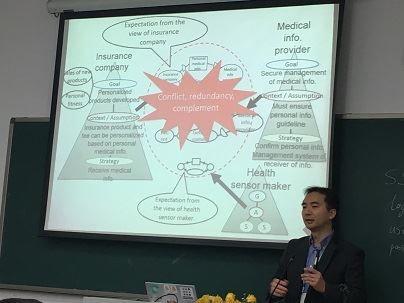
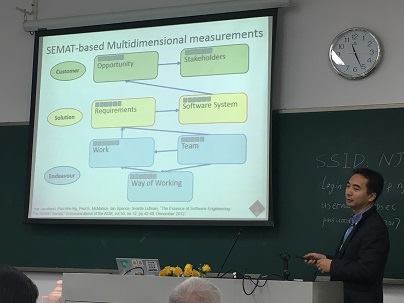
https://www.slideshare.net/hironoriwashizaki/pitfalls-and-countermeasures-in-software-quality-measurements-and-evaluations
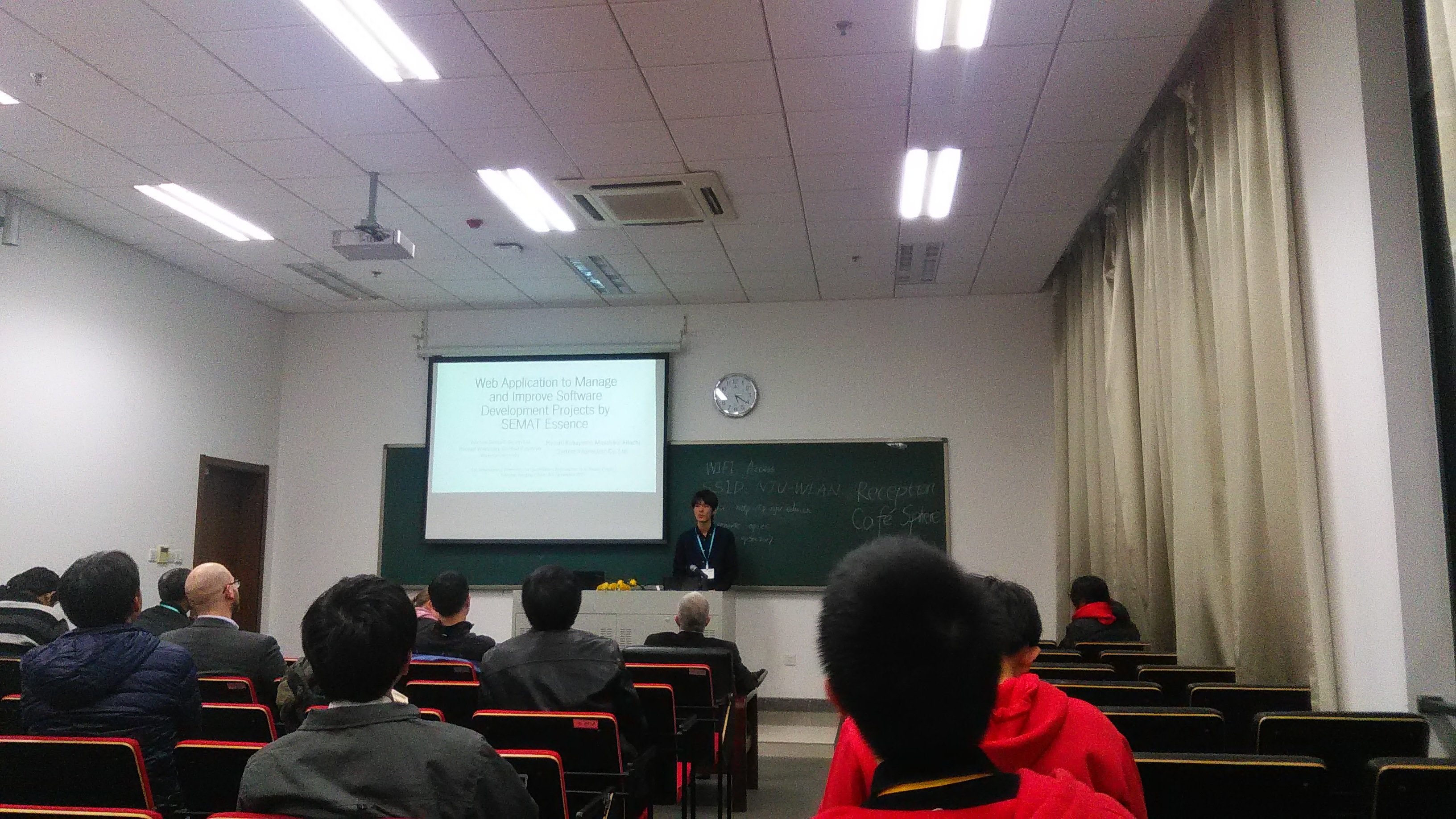
In addition, M1 Yuichiro Senzaki gave a talk titled “A Web Application to Manage and Improve Software Development Projects by SEMAT Essence” at QuASoQ2017.
11/25-26 岡山市で開催、しごと能力研究学会 第10回全国大会にて「IoT/クラウド/ビッグデータ/AI に関する文科省 社会人教育プログラム」と題し enPiT-Proスマートエスイーを基調報告
https://www.slideshare.net/hironoriwashizaki/enpitpro-83231387
Hironori Washizaki, Yann-Gael Gueheneuc, Foutse Khomh, “ProMeTA: A Taxonomy for Program Metamodels in Program Reverse Engineering,” Empirical Software Engineering (EMSE) journal, 2018. (SCIE indexed, CORE Rank A)(to appear)
To support program comprehension, maintenance, and evolution, metamodels are frequently used during program reverse engineering activities to describe and analyze constituents of a program and their relations. Reverse engineering tools often define their own metamodels according to the intended purposes and features. Although each metamodel has its own advantages, its limitations may be addressed by other metamodels. Existing works have evaluated and compared metamodels and tools, but none have considered all the possible characteristics and limitations to provide a comprehensive guideline for classifying, comparing, reusing, and extending program metamodels. To aid practitioners and researchers in classifying, comparing, reusing, and extending program metamodels and their corresponding reverse engineering tools according to the intended goals, we establish a conceptual framework with definitions of program metamodels and related concepts. We confirmed that any reverse engineering activity can be clearly described as a pattern based on the framework from the viewpoint of program metamodels. Then the framework is used to provide a comprehensive taxonomy, named Program Metamodel TAxonomy (ProMeTA), which incorporates newly identified characteristics into those stated in previous works, which were identified via a systematic literature review (SLR) on program metamodels, while keeping the orthogonality of the entire taxonomy. Additionally, we validate the taxonomy in terms of its orthogonality and usefulness through the classification of popular metamodels.
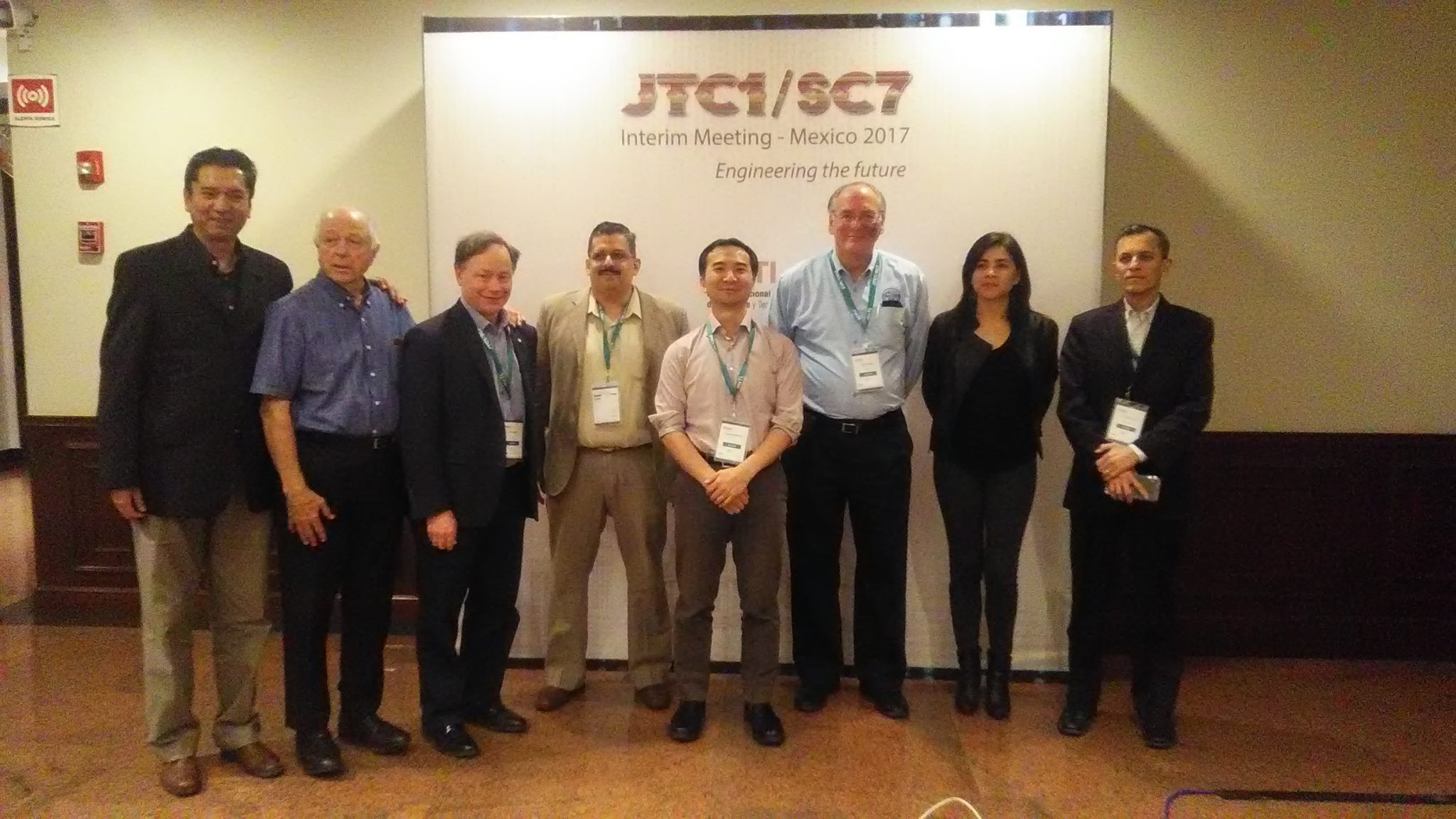
ISO/IEC/JTC1 SC7/WG20 Interim Mexico City (Nov 3-6) is successfully over! Prof. Washizaki serves as WG Convenor. WG20 is developing standards for Bodies of Knowledge and Professionalization in Systems and Software Engineering.

Yijun Yu, Haruhiko Kaiya, Nobukazu Yoshioka, Zhenjiang Hu, Hironori Washizaki, Yingfei Xiong, Amin Hosseinian-Far, “Goal Modelling for Security Problem Matching and Pattern Enforcement,” International Journal of Secure Software Engineering (IJSSE), 2018. (DBLP indexed)
#CSEET2017 30th IEEE Conference on Software Engineering Education and Training (CSEE&T), Savannah, Georgia, November 7-9, 2017 is successfully over! Thank you all for your contribution and participation. I hope everyone enjoyed the conference. See you next time in Hawaii!