カテゴリー別アーカイブ: 未分類

論文 Interactive Recovery of Requirements Traceability Links (CAiSE’15発表)がソフトウェア科学会大会に特別講演として招待

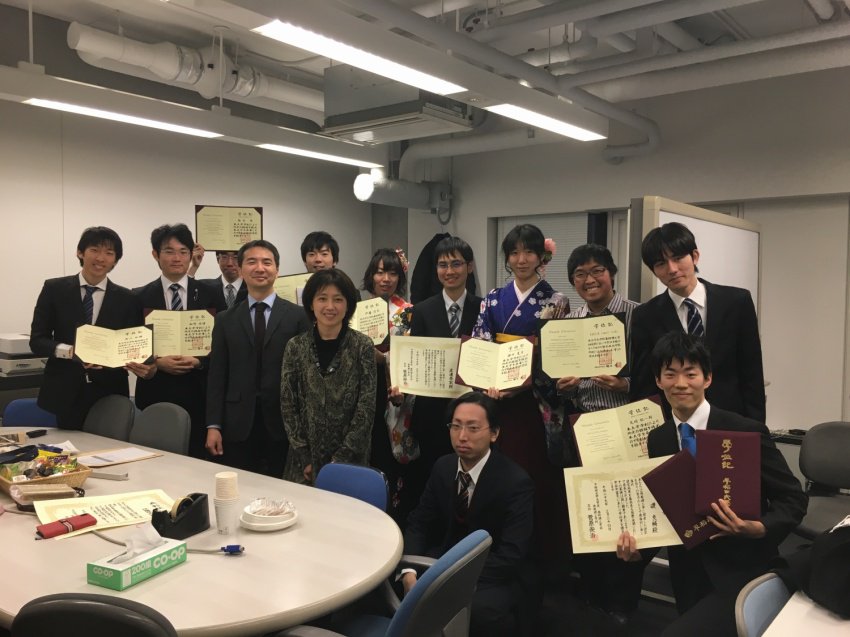
卒業生 土屋君の日立製作所との共同研究論文 Interactive Recovery of Requirements Traceability Links (CAiSE’15発表)がソフトウェア科学会大会に特別講演として招待されました。おめでとう。

Ryosuke Tsuchiya, Hironori Washizaki, Yoshiaki Fukazawa, Keishi Oshima, and Ryota Mibe,“Interactive Recovery of Requirements Traceability Links Using User Feedback and Configuration Management Logs,” Proceedings of 27th International Conference on Advanced Information Systems Engineering (CAiSE 2015), pp.247-262, 8-12 June 2015 in Stockholm, Sweden (CORE Rank A, Acceptance rate 31/236=13.1%)

ゲームと教育を考えるイベント McEdu 2016を8月20-21日に共催

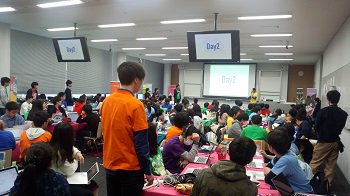
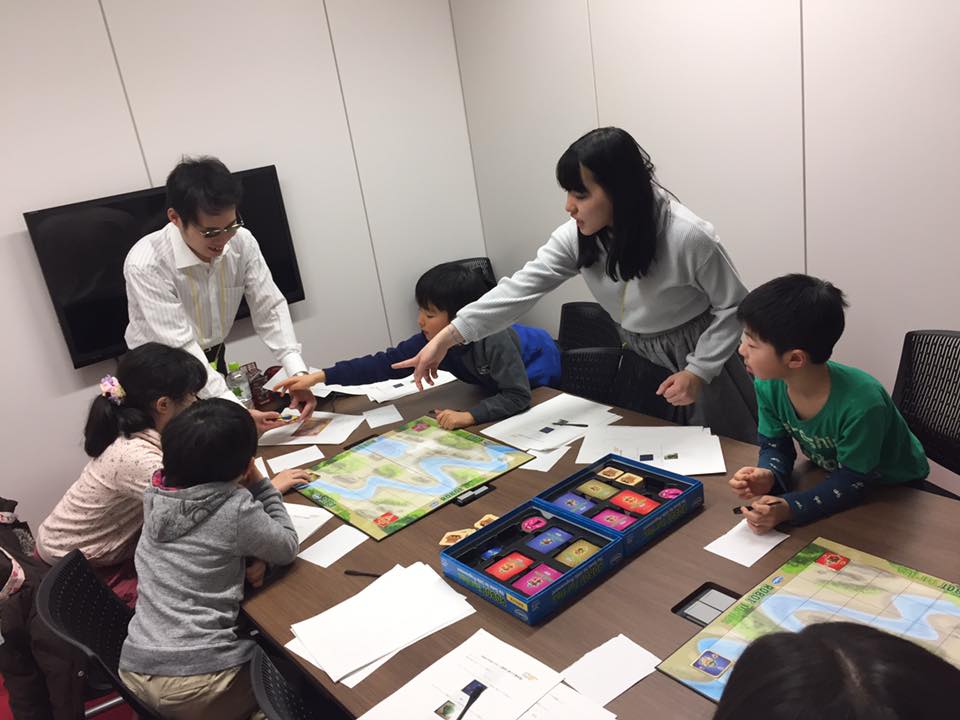
早稲田大学グローバルソフトウェアエンジニアリング研究所はTENTOおよび関係各位との共同により、ゲームと教育を考えるイベントMcEdu 2016を早稲田大学西早稲田キャンパスにて8月20-21日に共催し、1500名を超える多くの参加をいただきました。ご支援ご参加いただき有難うございました。鷲崎所長からは下記の講演を実施しました。

Prof. Washizaki presented Proposals for the SWEBOK evolution process from the viewpoint of ISO/IEC/JTC1/SC7 standardization activities at the SWEBOK Evolution Town Hall meeting on Aug 25.

Hironori Washizaki, Juan Garbajosa, “Proposals for the SWEBOK evolution process from the viewpoint of ISO/IEC/JTC1/SC7 standardization activities,” IEEE CS SWEBoK Evolution Virtual Town Hall Meeting, Aug 25, 2016

A Pattern Language for Handovers, focus-group/workshop proposal accepted at PLoP 2016.

Kei Ito, Hironori Washizaki, and Joe Yoder, “A Pattern Language for Handovers,” Focus-group/workshop proposal, 23rd Conference on Pattern Languages of Programs (PLoP 2016), Monticello, Illinois, USA, OCTOBER 24-26, 2016. (to appear)(CORE Rank B)

The goals of this workshop are finding the relations of handover patterns, specifying the priority of the patterns, finding possible new patterns, and sharing the experiences of handovers.

Case Study: Project Management Using Cross Project Software Reliability Growth Model Considering System Scale, accepted at ISSRE 2016 (CORE Rank A) Industry Track.

Kiyoshi Honda, Nobuhiro Nakamura, Hironori Washizaki and Yoshiaki Fukazawa, “Case Study: Project Management Using Cross Project Software Reliability Growth Model Considering System Scale,” 27th IEEE International Symposium on Software Reliability Engineering (ISSRE 2016), Industry Track, Ottawa, Canada 23-27 October 2016. (to appear)(CORE Rank A)

We propose a method to compare software products developed by the same company in the same domain. Our method, which measures the time series of the number of detected faults, employs software reliability growth models (SRGMs). SRGMs describe the relations between faults and the time necessary to detect them. Herein our method is extended to classify past projects for comparison to current projects to help managers and developers decide when to end the test phases or release a project. Past projects are classified by three parameters: lines of code, number of test cases, and test density. Then SRGM is applied. Our extended method is applied to the datasets for nine projects developed by Sumitomo Electric Industries, Ltd. Classification by test density produces the best results.

QA to AQ – Part Six – Being Agile at Quality, accepted at PLoP 2016 (CORE Rank B).

Joseph W. Yoder, Rebecca WirfsBrock, Hironori Washizaki, “QA to AQ – Part Six – Being Agile at Quality,” 23rd Conference on Pattern Languages of Programs (PLoP 2016), Monticello, Illinois, USA, OCTOBER 24-26, 2016. (to appear)(CORE Rank B)

In order to pay appropriate attention to system qualities, it is important that quality is enabled and infused into the prioritized work throughout the whole process. This paper presents three patterns for Enabling and Infusing Quality: System Quali ty Specialist, Spread the Qual ity Workload, and Automate First. System Quality Specialists can help to define, test, and implement complex quality items that are complex and require a lot of expertise to get right. Spreading the Quality Workload throughout the development process can help keeps the team from being overburdened with quality tasks. Automating First what you can to streamline your build and testing processes enables you to eliminate tedious or mundane tasks allowing more time for team members to focus on implementation and testing of important qualities.

A Pattern Language for Handovers, accepted at PLoP 2016 (CORE Rank B).

KEI ITO, HIRONORI WASHIZAKI, JOSEPH W.YODER, YOSHIAKI FUKAZAWA, “A Pattern Language for Handovers,” 23rd Conference on Pattern Languages of Programs (PLoP 2016), Monticello, Illinois, USA, OCTOBER 24-26, 2016. (to appear)(CORE Rank B)

In 2007 issues with handovers became apparent in Japan, when many people from the Baby Boomer Generation retired simultaneously. Most business people are familiar with the concept of a handover. Although effective handovers are crucial for seamless business operations during personnel changes, the preferable elements for a handover are ambiguous and not well researched. This motivated us to examine this topic. We held a workshop on handovers to assess actual problems due to undesirable handovers. The results were used to elucidate three handover anti-patterns, which identify concrete problems of handovers. To mitigate the problems, we found a pattern language for handovers by analyzing three anti-patterns. Herein, we outline a pattern language for handovers.

Patterns for Program Reverse Engineering from the Viewpoint of Metamodel, accepted at PLoP 2016 (CORE Rank B).

Hironori Washizaki, Yann-Gael Gueheneuc, Foutse Khomh, “Patterns for Program Reverse Engineering from the Viewpoint of Metamodel,” 23rd Conference on Pattern Languages of Programs (PLoP 2016), Monticello, Illinois, USA, OCTOBER 24-26, 2016. (to appear)(CORE Rank B)

Reverse engineering tools often define their own metamodels according to their purposes and intended features. These tools and metamodels have advantages that may benefit other metamodels as well as limitations that other metamodels may solve. To guide practitioners (and researchers) in selecting, integrating, and using appropriate tools, we propose a preliminary pattern catalog for program reverse engineering from the program metamodel viewpoint based on our conceptual framework in consideration of both grammarware and modelware approaches. The catalog consists of one metapattern, Transformation to higher abstraction levels, and three concrete patterns, Integrated program reverse engineering, Fact extraction, and Architecture recovery. The intended audience of these patterns is practitioners (and researchers) such as software maintainers who desire to comprehend a program. In addition, these patterns may be helpful for tool developers (and researchers) creating reverse engineering tools.

Proposals for the SWEBOK evolution process from the viewpoint of ISO/IEC/JTC1/SC7 standardization activities, accepted at IEEE CS SWEBoK Evolution Virtual Town Hall Meeting on Aug 25.

Hironori Washizaki, Juan Garbajosa, “Proposals for the SWEBOK evolution process from the viewpoint of ISO/IEC/JTC1/SC7 standardization activities,” IEEE CS SWEBoK Evolution Virtual Town Hall Meeting, Aug 25, 2016 (to appear)

ISO/IEC/JTC1/SC7 Software and Systems Engineering, recognized that SWEBOK is an internationally-accepted body of knowledge in software engineering so that ISO/IEC published SWEBOK 2004 and V3 as ISO/IEC technical reports ISO/IEC TR 19759:2005 [ISO19759:2005] and ISO/IEC TR 19759:2015 [ISO19759:2015] respectively. Within SC7, Working Group 20 (WG20) Software and systems bodies of knowledge and professionalization in collaboration with IEEE processed their standardization and publication processes. During these processes, we encountered some issues and considered possible corresponding countermeasures. In this paper, we recommend three countermeasures for further evolution of SWEBOK from the viewpoint of standardization within SC7: 1) Evolution process with active involvement of SC7 and WG20. 2) Alignment with ISO/IEC 24773:2008 [ISO24773] and related standards developed within SC7. 3) Eligibility criteria for knowledge areas based on market recognition such as job offers.

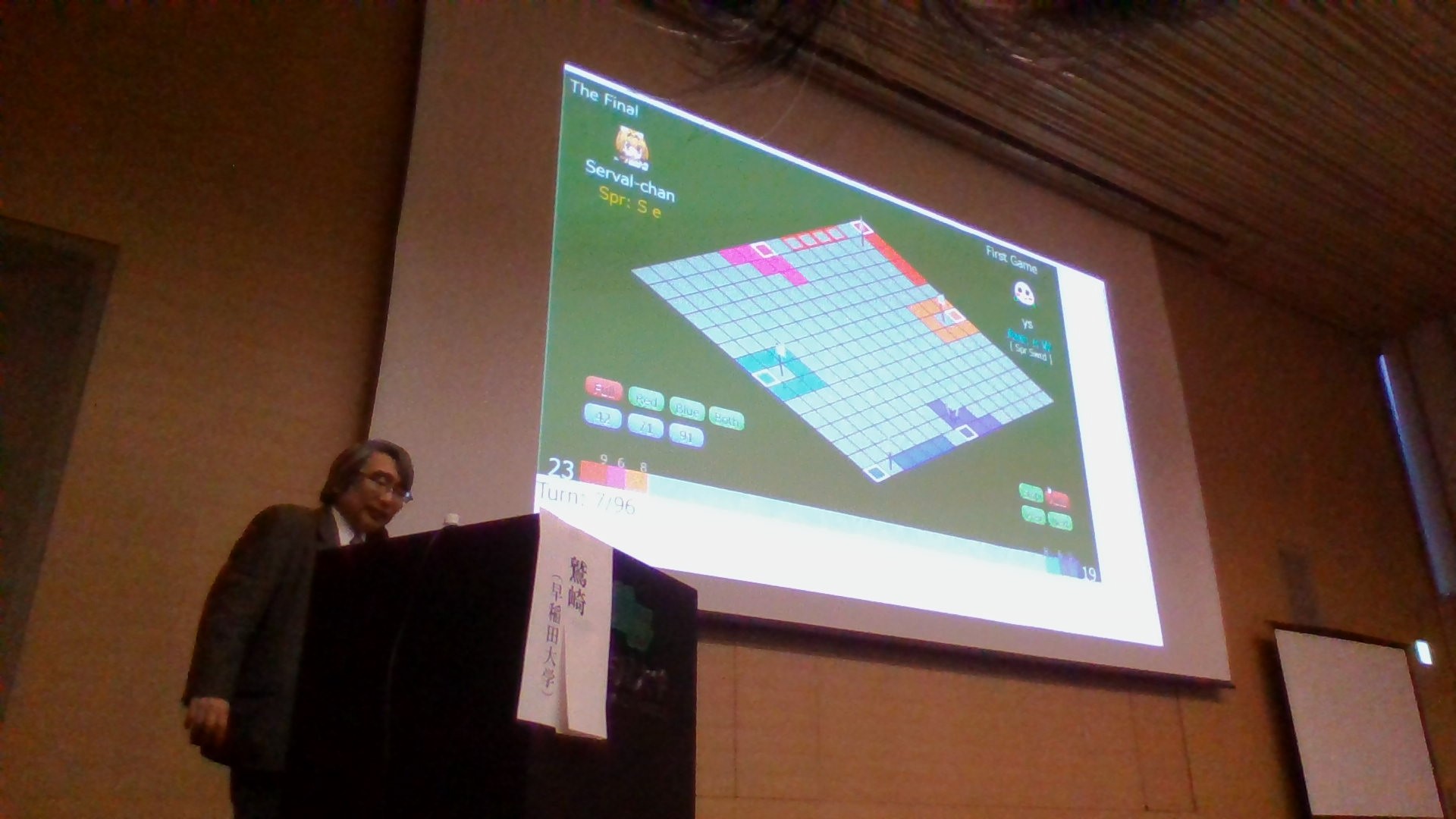
君の実力を試してみよう! -「ラーニング・スルー・コンテスト」のすすめ -、情報処理 2016年10月号に寄稿

鷲崎弘宜, “君の実力を試してみよう! -「ラーニング・スルー・コンテスト」のすすめ -“, 情報処理, Vol.57, No.10, pp.1-4 (to appear)

これまでの連載記事を通じてプログラミングの基本を学んだ皆さんが次にすべきこと,それはプログラミング・コンテストへの挑戦である.コンテストは,上級者が技を競うだけの場ではない.初学者が実力を客観的に把握しながら,楽しみつつ中級者,上級者へと自ら駆け上がっていくための最適なプラットフォームである.本稿では,コンテストがプログラミング学習に優れていることを説明したうえで,国内外で高校生が参加できるコンテストやその問題,若年層の取り組みの様子を紹介する.具体的には,筆者が創設した情報処理学会SamurAI Coding や,情報オリンピックなどを紹介する.