2025 Reflection and 2026 New Year’s Resolution

New Year’s Resolution 2026

j_HironoriWashizakiJanuary 1st, 2026

Hironori Washizaki

Below, I review last year’s resolution, 2025, and describe New Year’s Resolution, 2026, in terms of Community and Professional Contributions, Projects, Achievements, and Team Organization.

Summary of 2025: Year of International Leadership

Vision for 2026: Year of Global Leadership and Growth

  • Society/Community: As IEEE-CS Past President and IEEE TAB Working Group Chair, continue contributing to the wider society and community. Leading IEEE SWEBOK Summit 2026 co-located with ICSE; ISO/IEC/JTC1/SC7/WG20 Convenor; Organizing and contributing to IEEE COMPSAC 2026 SIoT Symposium, IEEE CAI 2026, AsianPLoP 2026, and EASE 2026 Vision and Posters track. Preparing IEEE/ACM 2029 Tokyo.
  • Research and Education Projects: Leading public-funded research projects as (co-)PI in Software Engineering and AI: JSPS Grants-in-Aid for Scientific Research Machine Learning Patterns, JSPS Grants-in-Aid for Scientific Research Machine Learning Support Software Maintenance and Evolution, JSPS Grant-in-Aid for Scientific Research (A) Dependable Continuum Foundation for Mobility AI, and JST Future Society eAI Framework. Leading funded educational projects as PI: Smart SE for professional IoT/AI/DX training and JST BOOST W-SPRING-AI for PhD students in AI. In addition, around ten industrial-supported projects.
  • Publicity and Achievements: to be recognized internationally as a community-leading research team in smart and intelligent software engineering for systems, business, and society by promoting research broadly while strengthening industrial and international collaboration, obtaining more funding, and, as a result, providing more value to society, and contributing to the bodies of knowledge.
  • Team: Promote domestic and international collaboration. Diversity through having various students, including international students, exchange students, and new doctoral students.

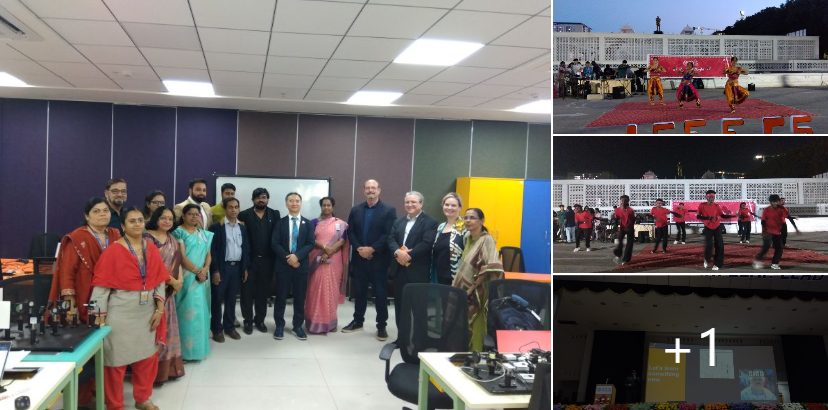
Prof. Washizaki was invited to join the IEEE Tunisian Student and Young Professional TSYP Congress,

Prof. Washizaki was invited to join the IEEE Tunisian Student and Young Professional TSYP Congress, hosted by IEEE Tunisia Section, IEEE Computer Society SYP Tunisia, IEEE Computer Society Region 8, IEEE ENIS SB Student Branch, IEEE Student Activities Committee Tunisia Section, ENIS, University of Sfax, with many partners (incl. IEEE Computer Society) in the beautiful Yasmine Hammamet to give a brief remark and a talk, participate in the IEEE CS/CN Students Contest, and, most importantly, connect with many students and early-career professionals in Tunisia! Thank you to all organizers, sponsors, and volunteers for such an amazing congress, full of energy and passion for growing our community and advancing technology for humanity!

Tokyo Selected to Host ICSE 2029

The ICSE Tokyo Bidding Committee is thrilled and deeply honored that the ICSE Steering Committee has selected Tokyo as the host city for the IEEE/ACM 51st International Conference on Software Engineering (ICSE2029, General Chairs: Hironori Washizaki and Jianjun Zhao). We are fully committed to dedicating all necessary resources to deliver an outstanding and memorable ICSE. We cannot wait to welcome you to Tokyo in 2029! Thank you to all who have supported this nomination for your encouragement.

Full message at: https://www.icse-conferences.org/news.html

Japan has proudly hosted ICSE twice before – ICSE 1982 in Tokyo and ICSE 1998 in Kyoto. After nearly 30 years, ICSE is finally returning to Japan, and we are delighted to welcome the community back to Tokyo, starting the next 50 years of ICSE. As Japan’s capital, Tokyo is consistently recognized as one of the safest cities in the world and is among the most dynamic and populous metropolitan areas globally, regularly topping travelers’ rankings.

The Japanese software engineering community, represented by IPSJ-SIGSE together with many other groups – including IEICE SIG-SS, SIG-KBSE, JSSST FOSE, MLSE, and rePiT – has been steadily growing and strengthening its research and practice activities. These efforts have created vibrant, long-standing nationwide networks of researchers, practitioners, and educators, supported by strong and active international collaborations.

The Japanese software engineering community is proud to welcome ICSE 2029 to Tokyo, with the generous support of the Tokyo Convention & Visitors Bureau and valued sponsors. Hosting ICSE 2029 marks a historic milestone for Japan and the broader region, strengthening global collaboration and partnerships across academia, industry, and government. Bringing ICSE to Tokyo will also broaden participation from around the world and provide exciting opportunities to connect with leading industries in AI, quantum computing, electrical engineering, manufacturing, robotics, automotive systems, and beyond, all of which are strong in Japan and the broader Asian region.

Revealing Reversed Causal Effects in Bug-Fix Delays: A LiNGAM-Based Comparison between OSS and Enterprise Systems, accepted for SANER 2026 Early Research Achievement (ERA) Track

Ryo Masuda, Takahiro Kinoshita, Hideyuki Kanuka, Sien Reeve O. Peralta, Hironori Washizaki and Masanari Kondo, “Revealing Reversed Causal Effects in Bug-Fix Delays: A LiNGAM-Based Comparison between OSS and Enterprise Systems,” 33rd IEEE International Conference on Software Analysis, Evolution and Reengineering (SANER 2026), Early Research Achievement (ERA) Track, Limassol, Cyprus, March 17 – 20, 2026.

BUPLinker: Bridging Users and Developers in Mobile Application Evolution, accepted for SANER 2026 Short Paper Track

Ayana Uematsu, Hironori Washizaki, Naoyasu Ubayashi, Masanari Kondo, Juichi Takahashi and Yohei Takagi, “BUPLinker: Bridging Users and Developers in Mobile Application Evolution,” 33rd IEEE International Conference on Software Analysis, Evolution and Reengineering (SANER 2026), Short Paper, Limassol, Cyprus, March 17 – 20, 2026.

Generating User Clones from Questionnaires: A Lightweight Approach to Requirements Elicitation, accepted for SANER 2026 Short Paper Track

Mai Hirabayashi, Hironori Washizaki, Naoyasu Ubayashi, Juichi Takahashi and Yohei Takagi, “Generating User Clones from Questionnaires: A Lightweight Approach to Requirements Elicitation,” 33rd IEEE International Conference on Software Analysis, Evolution and Reengineering (SANER 2026), Short Paper, Limassol, Cyprus, March 17 – 20, 2026.

Prof. Washizaki was invited to deliver a keynote at the 28th International Conference on Computer and Information Technology (ICCIT 2025)

Prof. Washizaki was invited to deliver a keynote at the 28th International Conference on Computer and Information Technology (ICCIT 2025, chairs Dr. Celia Shahnaz, Dr. Mohammad A. Karim, Dr. Mohammad S. Alam), held from December 19-21 at the Long Beach Hotel in Cox’s Bazar, Bangladesh, and organized by the IEEE Bangladesh Section.

IEEE Computer Society Japan Young Author Award ceremony was held

The IEEE Computer Society Japan Young Author Award ceremony was held by CS Tokyo/Japan Joint Chapter (Chair: Prof. Kiyoshi Honda), Kansai Chapter (Chair: Prof. Noriiro Yoshida), and Fukuoka Chapter (Chair: Prof. Koji Inoue) in cooperation with Smart SE. Congratulations to all awardees: Keisuke Sugiura, Zhenya Zhang, and Youmei Fan! IEEE CS is the largest global professional home in computing for everyone, engaging early-career professionals and supporting geographic activities.