Prof. Washizaki started his new role as Deputy Chief Information Officer (Deputy CIO) of Waseda University, supporting the CIO and leading the University’s ICT strategy, AI-empowered technology operations, and responsible digital transformation.
https://www.waseda.jp/top/en/
Our lab has issued a press release titled “mkcheck2: A Highly Efficient and Accurate Approach for Build Dependency Verification”
Our lab has issued a press release titled “mkcheck2: A Highly Efficient and Accurate Approach for Build Dependency Verification,” based on the seminal work primarily led by Mr. Yuta Saito and Prof. Kazunori Sakamoto, presented at IEEE/ACM ICSE 2026.
Its implementation is available at https://github.com/katei-lab/mkcheck2 Take a look!
The proposed approach significantly reduces performance overhead, making continuous dependency verification in large-scale projects practical. Build systems are a fundamental component of modern software development. Dependency-related errors represent a significant portion of build errors in large-scale projects. However, existing tools for detecting these errors struggle to achieve both high performance and accuracy. In a new study, researchers developed mkcheck2, which reduces performance overhead by up to 99.7% while maintaining accuracy through an efficient eBPF-based system call tracing method and incremental analysis, thereby making continuous dependency verification practical.
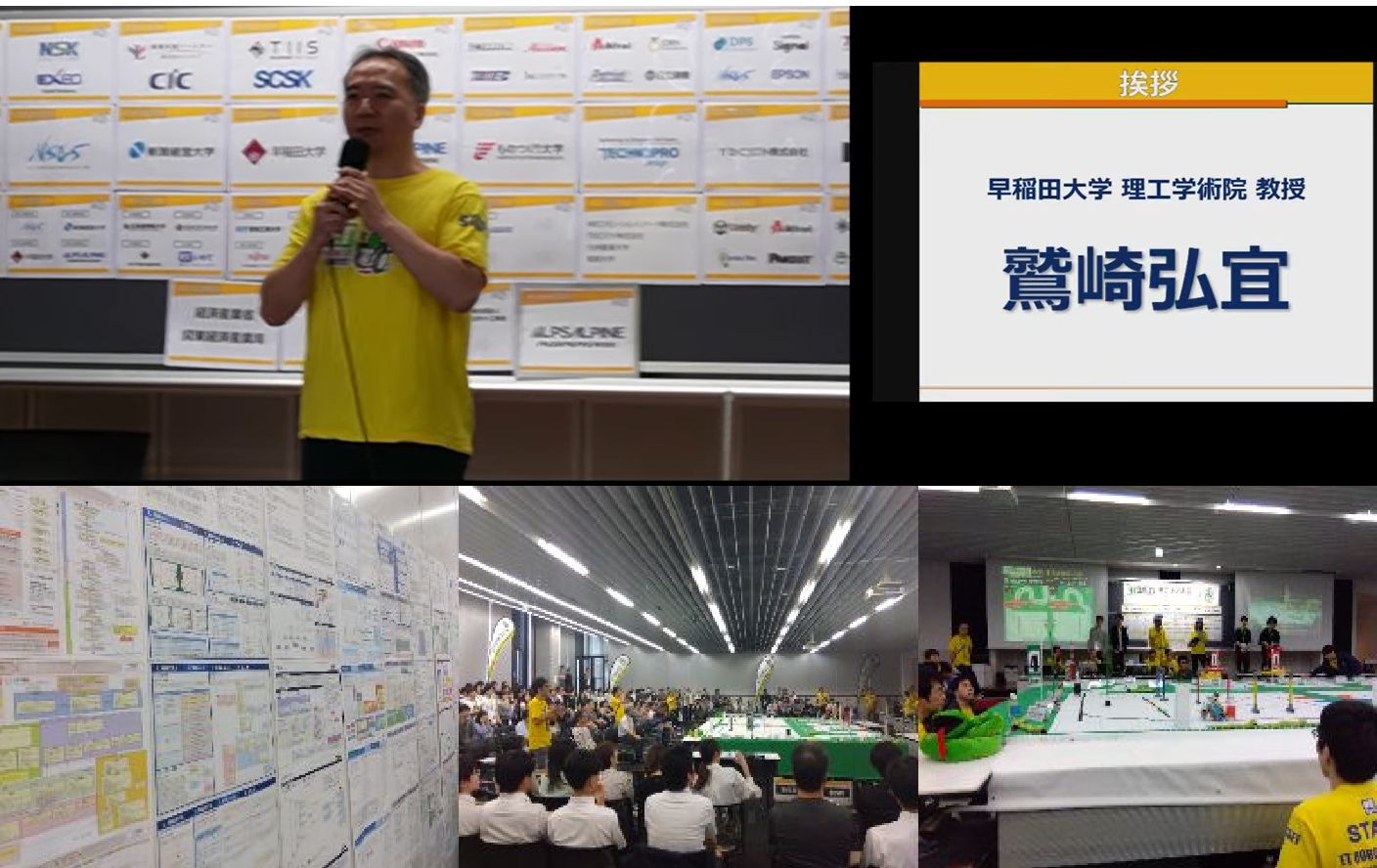
Our campus hosted the Tokyo & North Kanto regional round of the 25th ET software design contest (ET_Robocon)
Our campus hosted the Tokyo & North Kanto regional round of the 25th ET software design contest (ET_Robocon), which provides engineers and students to study model-based systems engineering with robotics control. Participants made excellent efforts in robot control and modeling. In the age of physical AI, this contest’s significance continues to grow.
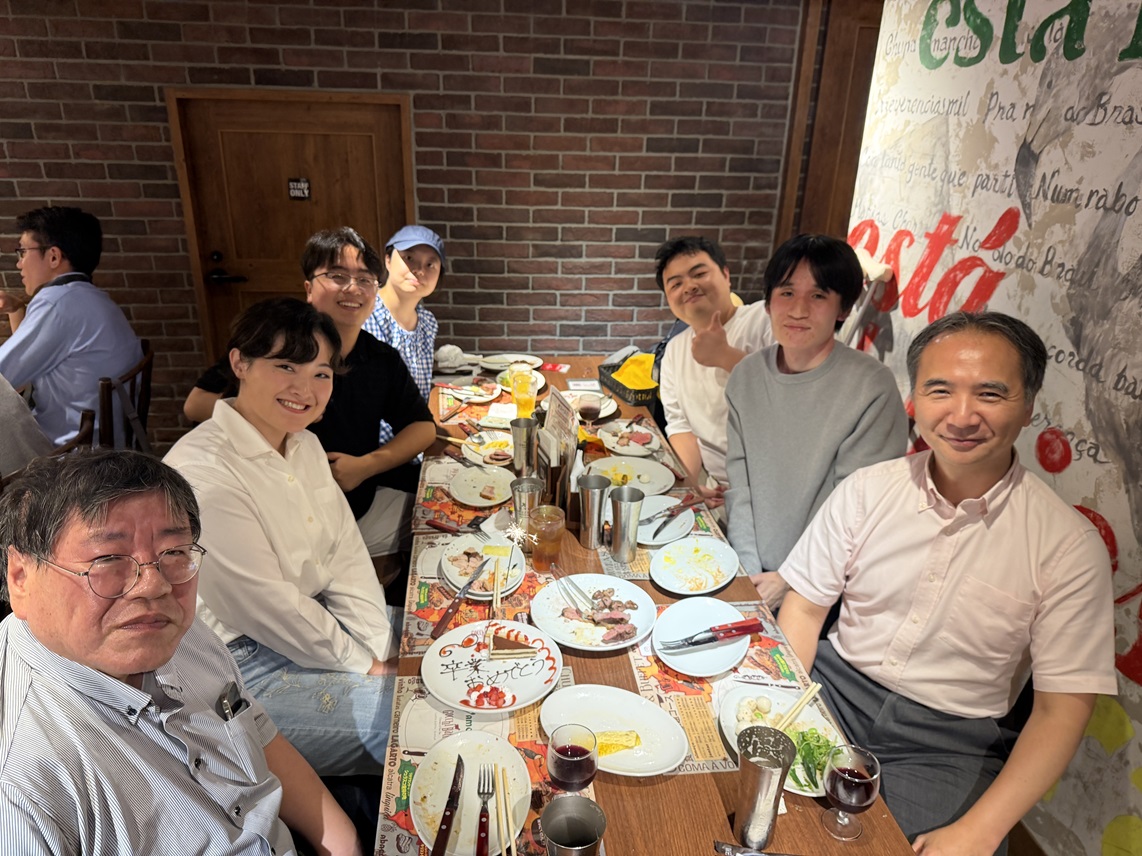
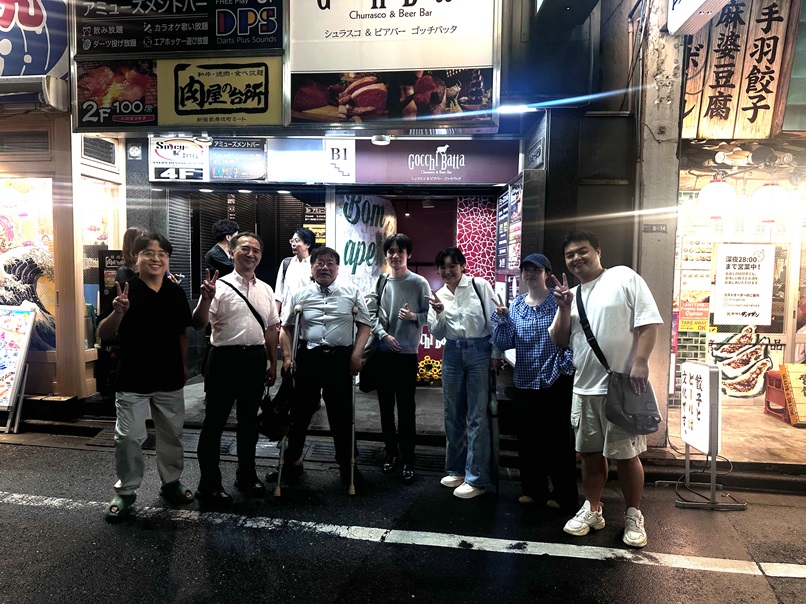
Two students graduated from the master’s and bachelor’s programs
Congrats, Fumika, on completing your master’s degree. Wishing you continued success. Kohta received the Dean’s Award upon graduation. Congratulations! We had a great farewell at a churrasco restaurant.
プレスリリース: ファイル依存関係の検証を99.7%高速化
齋藤優太君が在籍時に取り組み、ICSE 2026にて発表した成果のプレスリリースが出ました。ぜひご覧ください。
『ファイル依存関係の検証を99.7%高速化 – Global Research Center (GRC) 早稲田大学 研究活動』
会議名:48th IEEE/ACM International Conference on Software Engineering (ICSE’26)
雑誌名:Proceedings of the 2026 IEEE/ACM International Conference on Software Engineering
論文名:Efficient Build Dependency Verification Using eBPF and Incremental Analysis
執筆者名(所属機関名):
齋藤 優太(早稲田大学)*、坂本 一憲(東京通信大学、WillBooster株式会社)、鷲崎 弘宜(早稲田大学、国立情報学研究所、株式会社エクスモーション)
掲載日時:2026年9月11日
掲載URL:https://dl.acm.org/doi/10.1145/3744916.3773204
DOI:https://doi.org/10.1145/3744916.3773204
SWEBOK Guide V5 Town Hall on September 28th
The IEEE Computer Society, in cooperation with the IEEE Japan Office, is pleased to invite you to the following online webinar as part of the “SWEBOK Guide V5 Town Hall Series.” Don’t miss it!
*Call for Participation*
SWEBOK Guide V5 Town Hall Series
– Shaping the future of the body of knowledge in software engineering –
2026 September 28th MON, 1:30pm – 3:00pm UTC, online (Zoom)
https://jp.ieee.org/event/swebok-guide-v5-town-hall-series/
The Guide to the Software Engineering Body of Knowledge (SWEBOK Guide, https://www.computer.org/…/bodies…/software-engineering ), published by the IEEE Computer Society (IEEE CS), captures generally accepted, consensus-driven knowledge shaped through continuous interaction between software engineering research and practice. Its latest editions, SWEBOK Guide V4.0 (2024) and V4.0a (2025), reflect modern engineering paradigms and emerging areas, including Agile and DevOps, software architecture, security, and AI.
IEEE CS has begun work on the next edition, SWEBOK Guide V5, aiming to move to a five-year update cycle rather than the longer intervals of previous editions. The SWEBOK Editors are currently designing V5’s fundamental architecture, its evolution process, and candidate topics for inclusion.
For V5, the Editors are considering an architecture that combines a stable core body of knowledge with evolving knowledge supplements. The core would provide continuity for long-term curricula, professional development, and certification, while supplements could evolve more rapidly in response to emerging technologies, practices, and risks. Potential supplement areas include AI and software engineering, sustainable software engineering, and research software.
The Editors are now seeking early feedback from the broader software engineering community—including industry professionals, academic institutions, and standards-setting bodies—on the proposed architecture, candidate topics, and the process for evolving the Guide.
A series of interactive town halls will provide opportunities to discuss these ideas and gather community input. Your feedback will contribute to the development of a SWEBOK V5 Master Plan, targeted for release at the SWEBOK Summit 2027 in April (https://conf.researchr.org/home/icse-2027/swebok-2027). Join us in shaping the future of the Software Engineering Body of Knowledge!
*Program*
2026 September 28th MON 1:30pm-3:00pm UTC
1:30pm-1:50pm SWEBOK and Certification Introduction
Hironori Washizaki (Waseda University)
Steve Tockey (Construx Software)
1:50pm-2:10pm Preliminary plan of SWEBOK Guide V5: Structure, Process (and content)
Hironori Washizaki (Waseda University) and other editors
2:10pm-2:55pm Open discussion: Soliciting comments from the audience and discussion with the SWEBOK editors
2:55pm-3:00pm Closing: Future schedule incl. SWEBOK Summit 2027
*Registration*
Please register yourself at: https://forms.gle/Xto9PZVWnKcKUCZw7
The IEEE Japan Office will send the Zoom participation link to registered participants in due course.
*Contact*
Prof. Hironori Washizaki ( http://www.washi.cs.waseda.ac.jp/washizaki/ )
SWEBOK Guide Editor & IEEE Computer Society 2025 President
swebok@computer.org
IEEE Japan Office
E-mail: ieee-japan@ieee.org
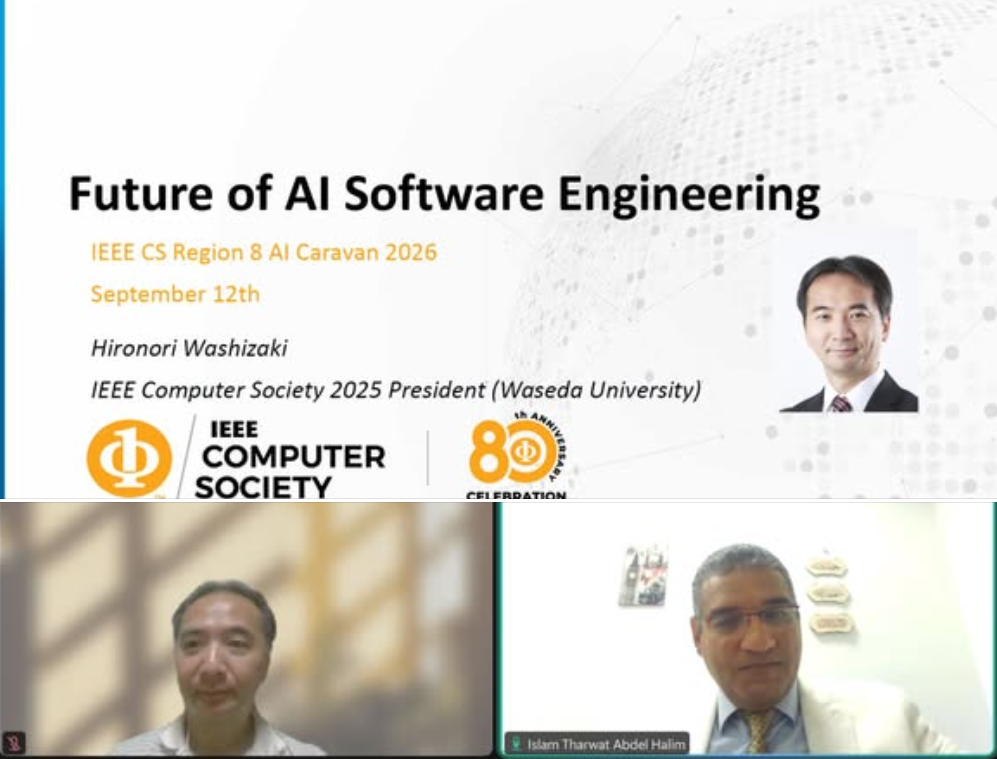
Prof. Washizaki was delighted to deliver his talk on the future of AI software engineering at the IEEE Computer Society Region 8 AI Caravan 2026 Opening
Thanks to Islam Tharwat Abdel Halim and the team, Prof. Washizaki was delighted to deliver his talk on the future of AI software engineering at the IEEE Computer Society Region 8 AI Caravan 2026 Opening, which is a flagship Region 8 initiative serving professionals, university communities, school students, and AI leaders across borders.
ソフトウェアエンジニアリングシンポジウム SES2026 にて鵜林教授が情報処理学会 コンピュータサイエンス領域功績賞 記念講演。一般論文「生成AI時代におけるペルソナ概念の変容 ―要求工学分野における文献レビュー―」が研究奨励賞を受賞
鵜林教授が情報処理学会 コンピュータサイエンス領域功績賞を受賞し、ソフトウェアエンジニアリングシンポジウム SES2026 にて記念講演。
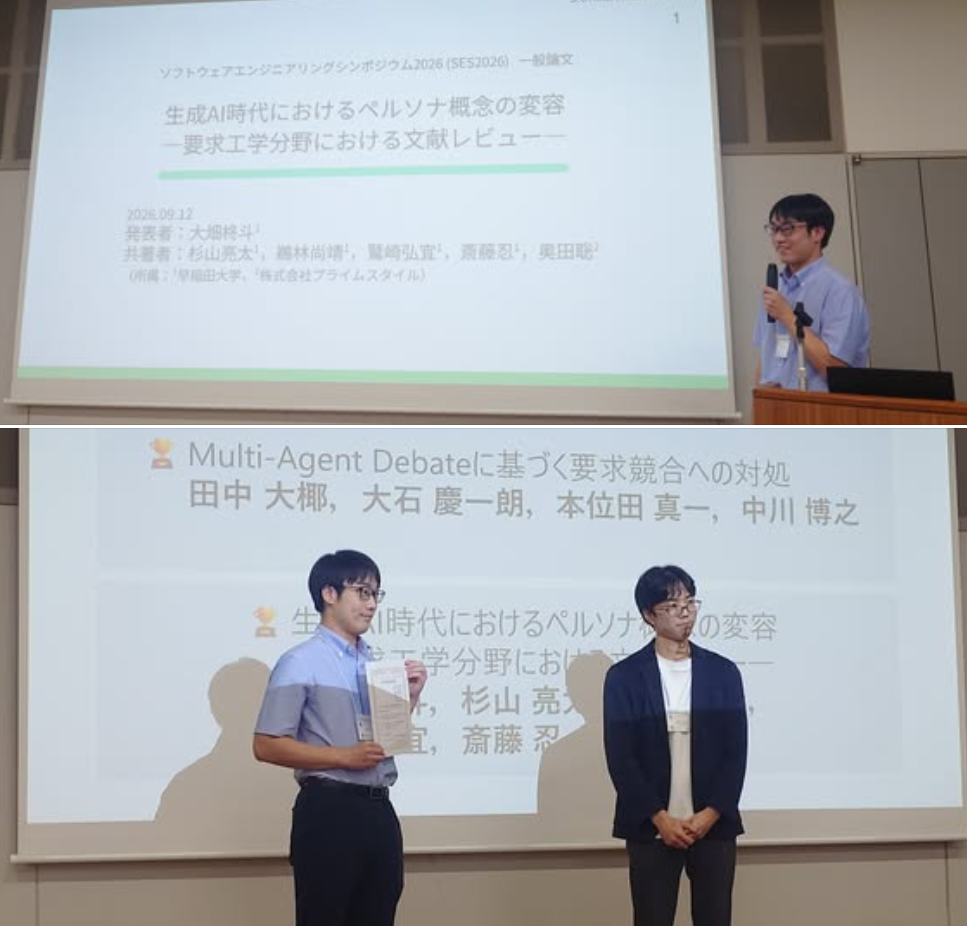
SES2026 にて一般論文「生成AI時代におけるペルソナ概念の変容 ―要求工学分野における文献レビュー―」が研究奨励賞を受賞。おめでとう、大畑君。他に小山さんより一般論文の発表。
大畑 柊斗,杉山 亮太,鵜林 尚靖,鷲崎 弘宜,斎藤 忍(早稲田大学), 奥田 聡(プライムスタイル), “生成AI時代におけるペルソナ概念の変容 ―要求工学分野における文献レビュー―,” ソフトウェアエンジニアリングシンポジウム SES2026, 慶応義塾大学 日吉キャンパス, 2026年9月10日(木)~9月12日(土)
Our paper titled “Does Agent Configuration Matter? An Empirical Study of Process-Level Quality Adaptation in Multi-Agent Requirements Engineering,” got accepted for PROFES 2026
Haowei Cheng, Milhan Kim, Bowen Jiang, Weixing Zhang, Yuhong Fu, Duy Truong Vinh Truong, Thanh Phan Thi Huyen, Foutse Khomh, Nobukazu Yoshioka, Naoyasu Ubayashi and Hironori Washizaki, “Does Agent Configuration Matter? An Empirical Study of Process-Level Quality Adaptation in Multi-Agent Requirements Engineering,” 27th International Conference on Product-Focused Software Process Improvement (PROFES 2026), Research Track, pp. 1-16, Karlskrona, Sweden, 30 November – 2 December, 2026.
鷲崎教授が JEITA 関西IT・ものづくり技術委員会・運営部会 主催セミナーにて「AIソフトウェアエンジニアリング ~ AIシステムのエンジニアリングおよびAIエージェントによる自動化 ~」と題し講演
鷲崎教授が JEITA 関西IT・ものづくり技術委員会・運営部会 主催セミナーにて「AIソフトウェアエンジニアリング ~ AIシステムのエンジニアリングおよびAIエージェントによる自動化 ~」と題し講演。多くのご参加、ありがとうございました。