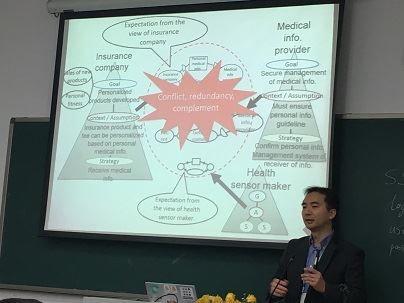
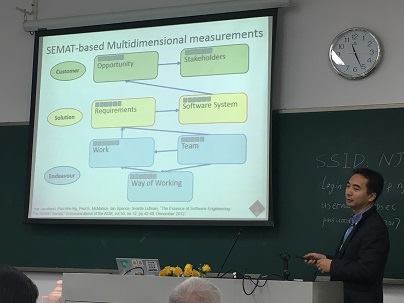
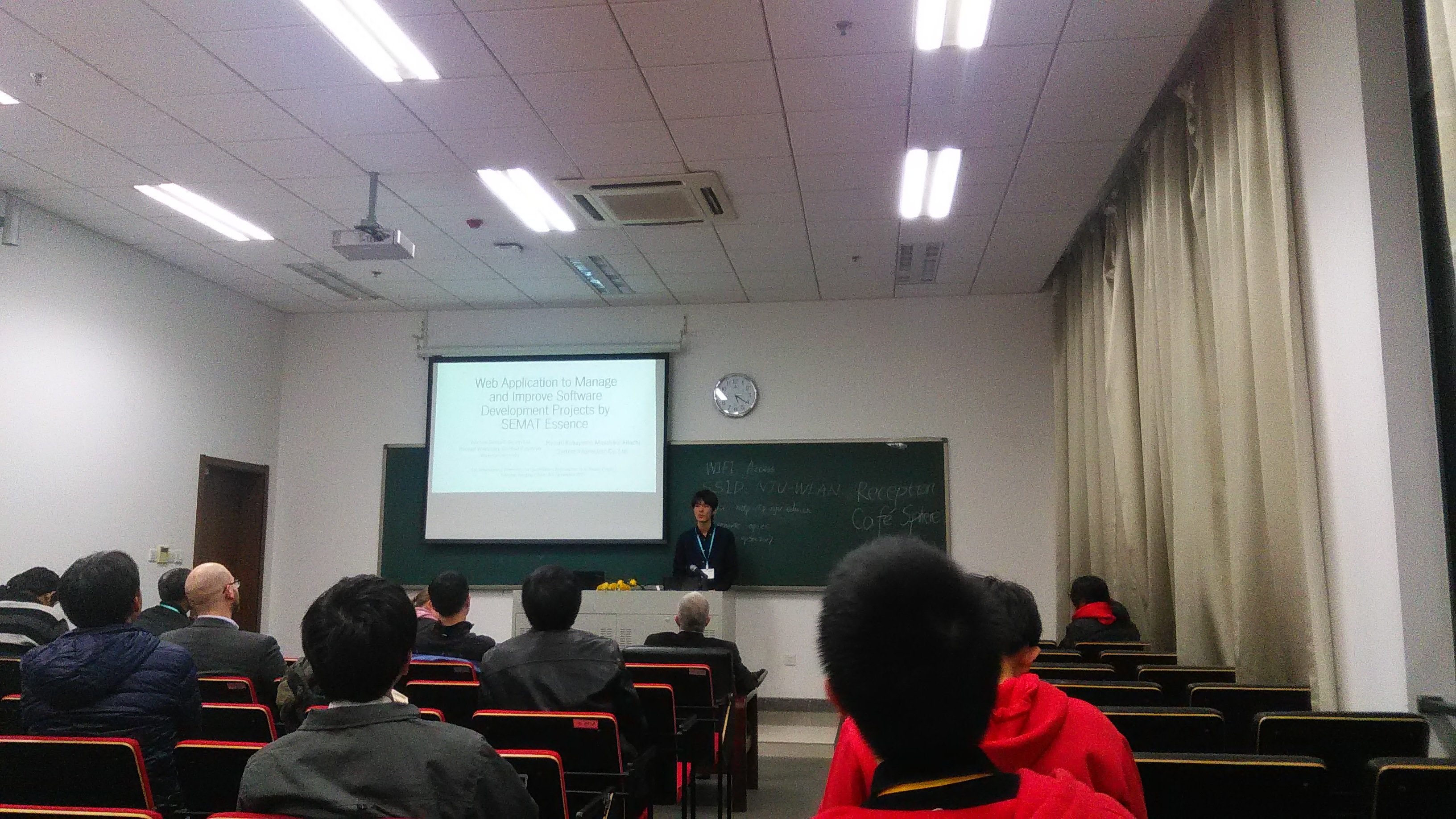
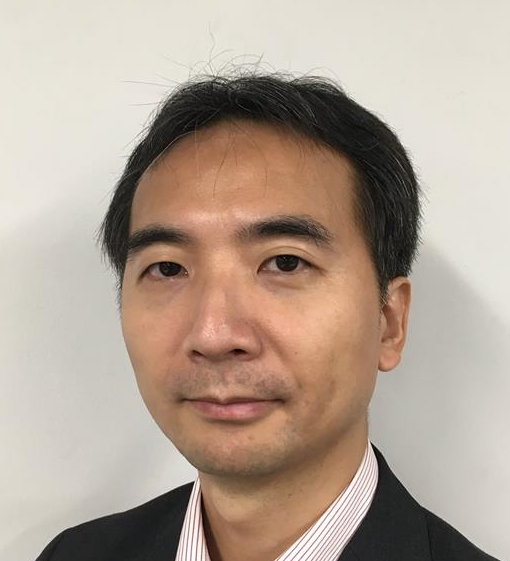
 プロジェクト、業績、コミュニティ・プロフェッショナル貢献、チーム構成の観点から、以下に2017年を振り返り、2018年の抱負を述べます。英語版もあります。
*ハイライト*
2017: スマートエスイーを含む13+助成・産学プロジェクト。論文誌論文 5(+3)、国際会議 22(+2)。早稲田大学ティーチングアワード総長賞・リサーチアワード両受賞。天皇皇后両陛下に拝謁。AsianPLoP Local, ICST/CSEE&T PC Chairs, SamurAI Coding Director。小川さん新秘書。
2018: 新規を含む14+助成・産学プロジェクト。論文誌論文 7、国際会議20偏。COMPSAC Local, AsianPLoP General, APSEC PC Chairs, SamurAI Coding Director、情報処理学会全国大会PC副委員長。理事会推薦で情報処理学会 理事選に立候補予定。秘書 篠原さん卒業。研究室10周年。
*プロジェクト*
2017: 我々は以下の5プロジェクトを成功裏に継続し、また各方面との連携により大規模な人材育成プログラム スマートエスイーの準備を始めました。加えて企業パートナーとの7以上の共同研究プロジェクトを継続しました。Fraunhofer IESE, Ecole Polytechnique de Montreal, Florida Atlantic University および Hillside Group を含む様々な海外パートナーとの研究連携を深めました。
- スマートエスイー: スマートシステム&サービス技術の産学連携イノベーティブ人材育成 2017-2021 (文部科学省 enPiT-Pro): AI・IoT分野のイノベーション人材を創出する社会人学び直し事業、13大学21組織、会員5000企業超と産学連携ネットワークを実現、3月12日に複数拠点合同シンポジウムを実施予定、6月開講予定
- G7 Programming Learning Summit 2016- (フジテレビKIDS, D2C 他との共同推進): プログラミング学習・教育環境の網羅的な定性定量調査研究、1月14日柏市にてワークショップ実施予定、3月13日に情報処理学会企画セッション予定
- TraceANY 2016-2021 (科研費 基盤研究(B)): あらゆるソフトウェア成果物のあらゆる抽象度における追跡手法、およびそれを支えるプログラムメタモデルの分類 (ProMeTA: Program Metamodel TAxonomy)。
- CSPM: セキュリティおよびプライバシ知識のメタモデル 2015-2019 (IISF SSRフォーラム、電気通信普及財団、SCAT研究助成): クラウド・フォグ・IoTコンピューティングにおけるセキュリティ&プライバシの知識を表現および構成するための共通メタモデルの構築。
- Waseda Software Quality Benchmark 2015- (IPA/SEC RISE: ソフトウェア工学分野の先導的研究支援事業): ソフトウェア製品のSQuaREに基づく体系的な品質評価
- GQM-RG: ゴール指向の定性/定量測定・マネジメントの調査研究 2013-: GQM+Strategiesおよび関連手法の実践および応用研究。
2018: 我々は本年を飛躍の年と位置付け、上述の6プロジェクトを継続しつつ社会へより具体的に深く働きかける形で発展させます。また7以上の企業パートナーとの共同研究を継続発展させます。加えて、IoTシステム&ソフトウェア工学に関する新たなプロジェクトの立ち上げを予定しています。
*業績* (2017年度、2016年度)
2017: 昨年我々は、SCIE、ESCIおよびDBLP収録の国際論文誌論文5編、国際会議発表22編 (うちCORE Rank A会議2編、Rank B 5編、Rank C 3編)、国際会議ポスター4件、学会誌記事・書籍8編、および国際ワークショップにおける2件の基調講演を含む32件の講演機会を得ました。我々の活動は読売新聞、東京新聞、日刊工業新聞、BSフジを含む多くのメディアにおいて報道されました。国際論文誌3編、国際会議2編(うちCORE Rank A 1編)が採択済みであり2018年に掲載予定です。2偏の論文誌論文が条件付き採択されています。私は早稲田大学において初めて、同大学ティーチングアワード総長賞とリサーチアワードの両方の表彰を受けました。さらに私は日本国際賞 後席にて天皇皇后両陛下へ研究紹介させていただく機会を頂戴しました。昨年1月1日に目標として掲げた数字は論文誌7編 (国際論文誌3編以上を含む)、国際会議20編 (うちCORE Rank A会議2編以上、Rank B会議10編以上)でした。採択済みで2018年に刊行予定の論文を含めると、全体として目標を概ね達成したと自己評価します。無論、我々はこれに満足せず、常により良く、より多くの成果をあげていきます。
2018: 今年我々は、昨年からのビジョンを拡張したものとして「理論とデータに裏付けされたアクショナブルプラクティスを中心とした高信頼システム&ソフトウェアエンジニアリングの実現」を掲げて、10以上の産業界・学術界パートナーと協調しながら、大規模な競争的資金を獲得しつつ研究を進めます。理論に裏打ちされた独創的かつアクショナブルなソフトウェア・システムズエンジニアリング手法・ツールにより、ソフトウェア・システムズエンジニアリングの産業界および学術界に貢献します。よりインパクトのある論文をより良い場所で発表します。具体的には、論文誌7編 (国際論文誌4編以上を含む)、国際会議20編 (うちCORE Rank A/A* 会議3編以上、Rank B/C会議10編以上)を目標とします。我々の研究成果の多くが手法、プラクティス、ツールといった形で、研究パートナーとの連携を通じて引き続き実際に用いられ実質的価値を生み出していくことを追求します。
*コミュニティ・プロフェッショナル貢献*
2017: 多くのご支援ご協力の元、次にあげる多くのプログラミング・エンジニアリングコンテストを開催あるいは開催に貢献してきました: ETロボコン2017東京地区大会、情報処理学会SamurAI Coding 2016-17および2017-18。また我々は、次を含む多くの会議を開催あるいは開催に貢献してきました: IEEE ICST 2017(私が PC Co-Chair)、IEEE CSEE&T 2017(私が PC Co-Chair)、AsianPLoP 2017(私が Local Chair)、XP祭り2017、PyCon JP 2017、Life is Tech社とのプログラミング/ITキャンプ、およびG7プログラミングラーニングサミット。さらに私は次にあげる多くの重要な役割により学協会や社会へと貢献しました: ISO/IEC/JTC1 SC7/WG20 Convenor、IEEE Computer Society Membership at Large for the Professional and Educational Activities Board (PEAB)、IEEE Computer Society SWEBOK Steering Group Member、IEEE Computer Society Tokyo/Japan Joint Chapter Vice-Chair、SEMAT Japan Chapter Chair、Int. J. of Agile and Extreme Software Development (IJAESD) Editor-in-Chief、CSEE&T Steering Committee Member、および JSSST理事.
2018: 今年我々は引き続き、プログラミングコンテストである情報処理学会SamurAI Coding 2017-18の開催と運営に貢献し続けます。また我々は、次を含む多くの会議を早稲田大学で開催することに貢献します: AsianPLoP 2018(3月1-2日)、Life is Tech社とのプログラミング/ITキャンプ(3-4月)、ETロボコン2018東京地区大会(8-10月)。さらに私はIEEE COMPSAC 2018(7月23-27日)について Local Chairとして、またAPSEC 2018(12月4-7日)について PC Co-Chair としてそれぞれ貢献します。これらのイベントやコミュニティの開催や開催支援を通じて我々は研究成果を発信し、外部社会へと貢献するとともに繋がりを広げていきます。私はISO/IEC/JTC1 SC7/WG20 Convenor、IEEE Computer Society Membership at Large for the Professional and Educational Activities Board (PEAB)、IEEE Computer Society SWEBOK Steering Group Member、IEEE Computer Society Tokyo/Japan Joint Chapter Vice-Chair、SEMAT Japan Chapter Chair、Int. J. of Agile and Extreme Software Development (IJAESD) Editor-in-Chief、CSEE&T Steering Committee Member、JSSST理事として計算機科学全般およびソフトウェア・システムズエンジニアリング領域における研究・産業の発展、コミュニティ醸成および標準化をリードし貢献します。さらに私は、情報処理学会理事会からの推薦に基づき、2018年度および2019年度の情報処理学会 理事の選挙に立候補させていただく予定です。
*我々のチーム構成その他*
2017: 新たにインドおよびフランスから複数の国際学生が加わりました。さらに小川さんが新秘書として加わりました。
2018: 今年も引き続き様々な国々からの国際学生の参加を期待しています。多様な背景、文化、マインドセットを持つメンバが集うことで、我々のチームは創造性を含む様々な面でより強化され、上述の研究プロジェクトやプロフェッショナル貢献を強力に推し進めます。秘書 篠原さんが卒業します。研究室として3月に10周年を迎えて11年目に入ります。
鷲崎 弘宜
早稲田大学グローバルソフトウェアエンジニアリング研究所 所長・教授
国立情報学研究所 客員教授
株式会社システム情報 取締役(監査等委員)