Yuta Maezawa, Kazuki Nishiura, Hironori Washizaki, Shinichi Honiden, “Validating Ajax Applications Using a Delay-Based Mutation Technique,” Proceedings of the 29th IEEE/ACM International Conference on Automated Software Engineering (ASE 2014), Västerås, Sweden, September 15-19, 2014. (to appear)
カテゴリー別アーカイブ: 未分類
SPES2014 「残念なシステム」から「利益を生むシステム」に転換するためには! ~GQM+Strategies®の活用~
JISA技術シンポジウムSPES2014にて、「「残念なシステム」から「利益を生むシステム」に転換するためには! ~GQM+Strategies®の活用~ 」と題し、GQM+Strategeisの講演およびワークショップを実施しました。以下のスライドは、そのうちの最初の導入資料になります。
鷲崎弘宜*、小堀貴信、平林大典、岸田智子、「残念なシステム」から「利益を生むシステム 」に転換するためには! ~GQM+Strategies®の活用~、SPES2014,
http://www.jisa.or.jp/event/spes/tabid/266/Default.aspx#pgm
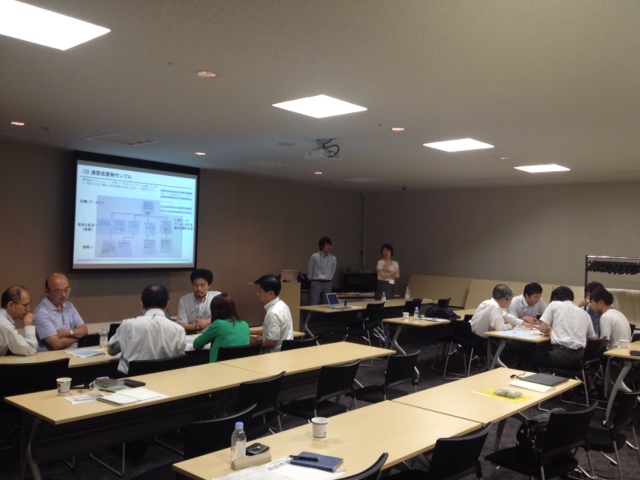
日本科学技術連盟SQiP研究会特別講義 「ソフトウェアエンジニアリングと私たちの研究のこれまでとこれから ~SEMAT (Software Engineering Method and Theory) の概要とカードゲームによる研究活動の分析~」
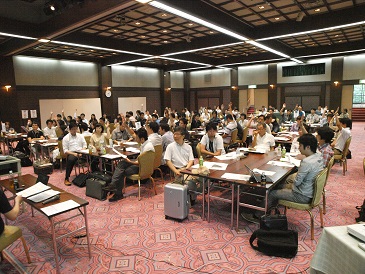
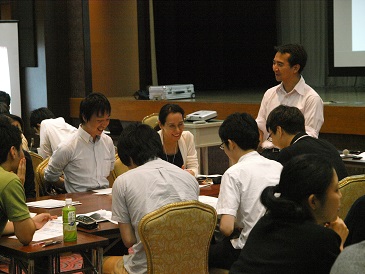
日本科学技術連盟2014年度SQiP研究会の7月合宿の特別講演として、「ソフトウェアエンジニアリングと私たちの研究のこれまでとこれから」と題し、SEMATエッセンスの解説、ならびに、SEMATアルファカードを用いたソフトウェア開発および研究活動を題材とした進捗ポーカーのワークショップを実施しました。解説およびワークショップを通じて、状態(ゴール)指向の大切さや、言葉や概念の認識の違い、それを補う共通基盤の必要性などを考える機会となりました。
栗田 太郎(フェリカネットワークス)、鷲崎 弘宜(早稲田大学)、石川 冬樹(国立情報学研究所)、「ソフトウェアエンジニアリングと私たちの研究のこれまでとこれから ~SEMAT (Software Engineering Method and Theory) の概要とカードゲームによる研究活動の分析~」、第30年度 (2014年度)ソフトウェア品質管理研究会 第3回例会(合宿)特別講義、2014.
解説資料は下記の再利用になります。
ACM ICPC 2014 Tokyo Regional Domestic Contest was held successfully on July 11th.
Working Group of ACM ICPC 2014 Tokyo Regional (Director: Prof. Washizaki) together with many sponsors and supporters hold the Domestic Contest online successfully on July 11th.Thank you for your support and participation! This year 326 teams from 72 universities competed, 33 teams are selected for Tokyo Regional. Standings and results are available here. From Waseda University, two teams “Dainagon” and “www.ai-comp.net” formed by our lab members together with students from other labs will join the Tokyo Regional! In addition to 33 teams qualified through domestic contest, several others from abroad will join Tokyo Regional Contest on October.
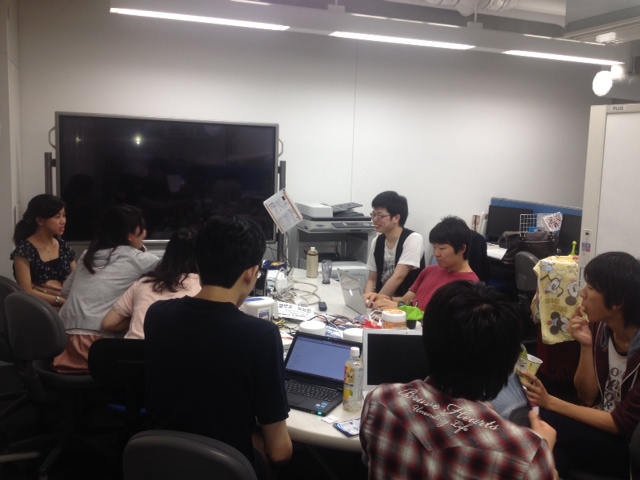 (Photo taken at Practice time)
Here is the message from Board Chair and Director to Domestic Contest Participants; the video was taken and edited by ICPC Secretaries and related staff). See you all soon in Tokyo!
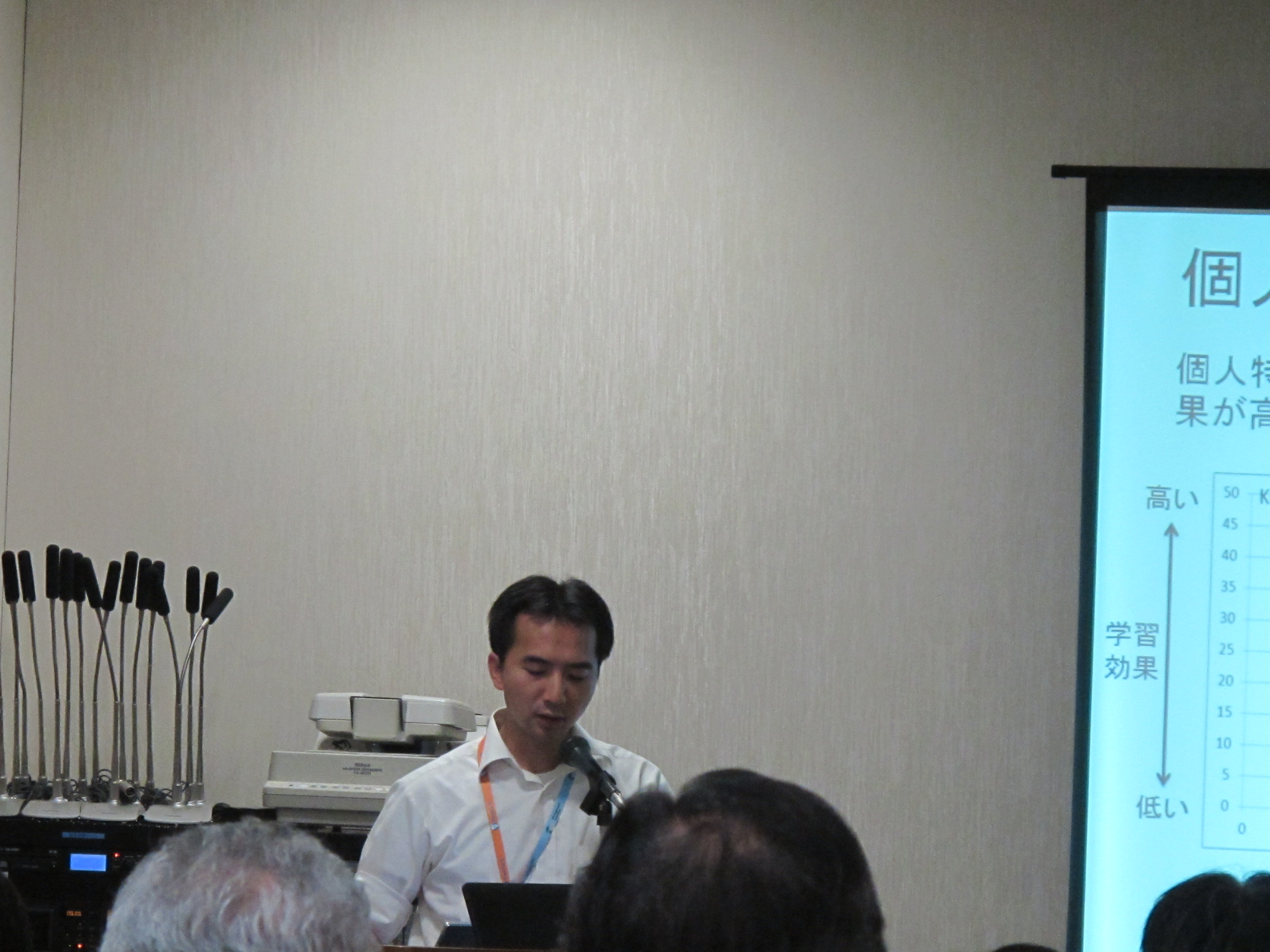
PMI日本フォーラム2014にて講演「プロジェクト型演習における最適なチーム構成とは?学びの過程はどのようなものか?~早稲田大学情報理工学科の実践~」
鷲崎 弘宜, プロジェクト型演習における最適なチーム構成とは?学びの過程はどのようなものか?~早稲田大学情報理工学科の実践~, PMI日本フォーラム2014, 7月13日
日経ITPro連載「残念なシステムのなくしかた」 第5回 プロジェクトに優先順位を付けよう (最終回)
鷲崎 弘宜、平林 大典、野村典文(早稲田大学ゴール指向経営研究会)、「残念なシステム」のなくしかた、第5回 プロジェクトに優先順位を付けよう、日経情報ストラテジー、日経ITPro、2014/06/11
企業組織のゴール(目標)と戦略を組織構造に沿って、ツリー構造に展開して見える化するGQM+Strategiesは、特定の企業・組織、業務領域に限定することなく広く適用可能な手法である。中長期の経営計画、ITシステム投資計画の策定などに活用できるのはもちろん、人事管理で用いるMBO(Management by Objectives:目標管理)などにも活用できる。
日経ITPro連載「残念なシステムのなくしかた」 第3回 僕たちの仕事は役に立っているのか?、第4回 測れるって素晴らしい!!
鷲崎 弘宜、平林 大典、野村典文(早稲田大学ゴール指向経営研究会)、「残念なシステム」のなくしかた、第3回 僕たちの仕事は役に立っているのか?、日経情報ストラテジー、日経ITPro、2014/06/11
鷲崎 弘宜、平林 大典、野村典文(早稲田大学ゴール指向経営研究会)、「残念なシステム」のなくしかた、第4回 測れるって素晴らしい!!、日経情報ストラテジー、日経ITPro、2014/06/25
Prof. Washizaki joined Panel as Panelist, and gave a short talk on Future of SEKE, at SEKE 2014.
Prof. Washizaki joined Panel session on 2nd day of SEKE 2014 as Panelist, and gave a short talk on Future of SEKE, Software Engineering and Knowledge-Engineering (slide available on SlideShare).
Major topics in SEKE, ICSE, KDD/CIKM in 10 years have been investigated. Moreover according to those topics, best papers at SEKE 2015 are predicted!

Using an Automatic Collection Method to Identify Patterns during Design Activity, accepted at JCKBSE 2014.
Jonatan Hernandez, Hironori Washizaki, and Yoshiaki Fukazawa, “Using an Automatic Collection Method to Identify Patterns during Design Activity,” Proceedings of 11TH Joint Conference on Knowledge-Based Software Engineering (JCKBSE 2014), 17-20, September, Volgograd, Russia (to appear) (JCKBSE2014_216.pdf)
Although design is an extremely important activity in software development, it is subjective because it depends on the designers’ knowledge and skills. Every designer has her or his own strategies to solve design problems. Herein we model the design process as an ordered sequence of logical actions of “Create”, “Delete”, and “Modify” applied to the elements of a UML class diagram, and propose an automatic approach to collect information about the design process to elucidate design strategies. The strategies considered are top-down, bottom-up, breadthfirst,
depth-first, and opportunistic. By mining the ordered sequences of actions for frequent patterns and analyzing the position and distribution of the actions in the sequence, we obtained two types of relationships in the design process: micro-patterns and macro-patterns. Then we evaluated our approach with two case studies. The first one, which occurred over a short time frame with seven subjects, identified the strategies used, while the second, which involved three subjects over a long period, revealed that there is not a universal strategy, but a combination of strategies.
ACM ICPC 2014 国際大学対抗プログラミングコンテストアジア地区予選東京大会国内予選 7/11開催(7/4申込締切)
■参加募集・申込締切延長 7月4日まで
ACM 国際大学対抗プログラミングコンテスト 2014 アジア地区予選 東京大会
ACM International Collegiate Programming Contest
Asia Regional Contest 2014 in Tokyo, Japan
http://icpc.iisf.or.jp/2014-waseda/
ACM 国際大学対抗プログラミングコンテストは,ACM(Association for
Computing Machinery)が主催する大学生を対象にした世界的規模のプログラ
ミングコンテストです。2014 年度で第 39 回を迎えます。2013 年度大会では,
全世界 94 カ国の 2,286 大学から 32,043 人が世界各国で開催された地区予選
に参加しました。コンテストでは,3 名の学生と 1 名のコーチからなるチーム
が,できるだけ多くの問題をできるだけ短時間で解くことを競います。
今般アジア地区予選の一つとなる東京大会への参加を募集します。日本で開催さ
れるアジア地区予選は通算 17 度目で,今回は早稲田大学が 3 度目のホスト校
となって東京大会を行います。
大学生のプログラミング技術を競う国際大会として,国内外から高い評価を与え
られている場ですので,プログラミング技術を磨き世界の頂点を目指したい学生
がたくさん参加されることを期待しています。今年もおかげさまで300を超える
チームから既に参加申し込みをいただいていますが,申し込み手続きに時間を
要しているチームが多いため締切を7月4日まで延長しました。無論,今からの
新たなチームの申し込みを歓迎します。
■国内予選
国内予選は,本コンテストの第一関門です。国内予選で上位に入ると,10 月開
催の東京大会に出場できます。開催要項・参加資格などは次の通りです。
国内予選で特に成績優秀なチームは,台湾・韓国など他の国で開催されるアジア
地区予選に派遣されるチャンスもあります。
参加チーム: 1チーム 3 名の学生とコーチ1名
<選手> 同じ大学(大学院も含む)・短大(専攻科も含む)・高専(4 年次以
上;専攻科も含む)に在籍し,大学・短大入学後(高専では 3 年次修了
後)5 年以内であること,など(資格の詳細は WWW ページを参照)
<コーチ> 教員あるいは大学院生
参加申込: http://icpc.iisf.or.jp/2014-waseda/ の「参加登録」から手続き
申込締切: 2014 年 7 月 4 日(金)
開催日: 2014 年 7 月 11 日(金) 16 時半~19 時半
場所: 各大学(インターネット使用)
問題記述: 英文(ただし、国内予選では日本語も併記)
使用言語: C,C++,Java
参加申込はコーチが行ってください。1 名が複数のチームのコーチになることも
可能です。 国内予選通過チームには,東京大会出場に係る旅費の補助および宿
泊先の用意を予定しています。
■アジア地区予選東京大会
国内予選を通過したチームが参加します。アジア地区予選東京大会の優勝チーム
は 2015 年春に行われる世界大会に招待されます。2 位以下のチームでも世界各
地区への枠の配分によっては,世界大会進出の可能性があります。
日時: 2014 年 10 月 18 日(土)~20 日(月)
10 月 18 日(土): 参加受付、トライアルユース(練習)など
10 月 19 日(日): コンテスト本番、表彰式など
10 月 20 日(月): エクスカーション(企業見学予定)
場所: 国立オリンピック記念青少年総合センター(東京都渋谷区)
主催: 早稲田大学,(公財)情報科学国際交流財団
後援(予定): 文部科学省,総務省,経済産業省,(独)科学技術振興機構,
情報サービス産業協会
協賛(予定): 情報処理学会,日本ソフトウェア科学会
スポンサー:
IBM, AtCoder, ワークスアプリケーションズ, LINE, ドワンゴ,
Wantedly, DreamArts, KLab, グリー, エム・ソフト, NTTコムウェア 他
実行委員長: 鷲崎 弘宜(早稲田大学)
審判長: 田中 哲朗(東京大学)
■ご質問・お問い合わせ
ACM-ICPC 東京大会実行委員会
URL: http://icpc.iisf.or.jp/2014-waseda/
E-mail: icpc2014@list.waseda.jp